Burst Pipe Repair in Littleton, CO
A burst pipe announces itself in ways you can't ignore: water pouring through a ceiling, a hissing sound inside a wall, a basement floor turning into a wading pool. In Littleton, the usual trigger is a hard Front Range freeze — water expands as it ices up, splits the pipe, and the break only reveals itself when things thaw and full pressure returns. Corroded older lines are the other common cause: they don't freeze, they just finally give out.
The repair itself starts with stopping the water and finding the actual break. The visible flooding is rarely where the pipe failed — water travels along joists, pipes, and wall cavities before it shows. Your provider traces the damage back to the failed section, cuts out what split, and replaces it with new material matched to your system. Before anything is closed back up, the line gets pressure-tested so the repair is verified, not assumed.
What a burst pipe leaves behind matters almost as much as the break. Water that has soaked drywall, insulation, and flooring doesn't dry on its own inside a wall — and damp material grows mold within a day or two. Ask your provider what they found wet and what needs to dry or come out. A clear-eyed walkthrough at the end of the repair is worth more than reassurance.
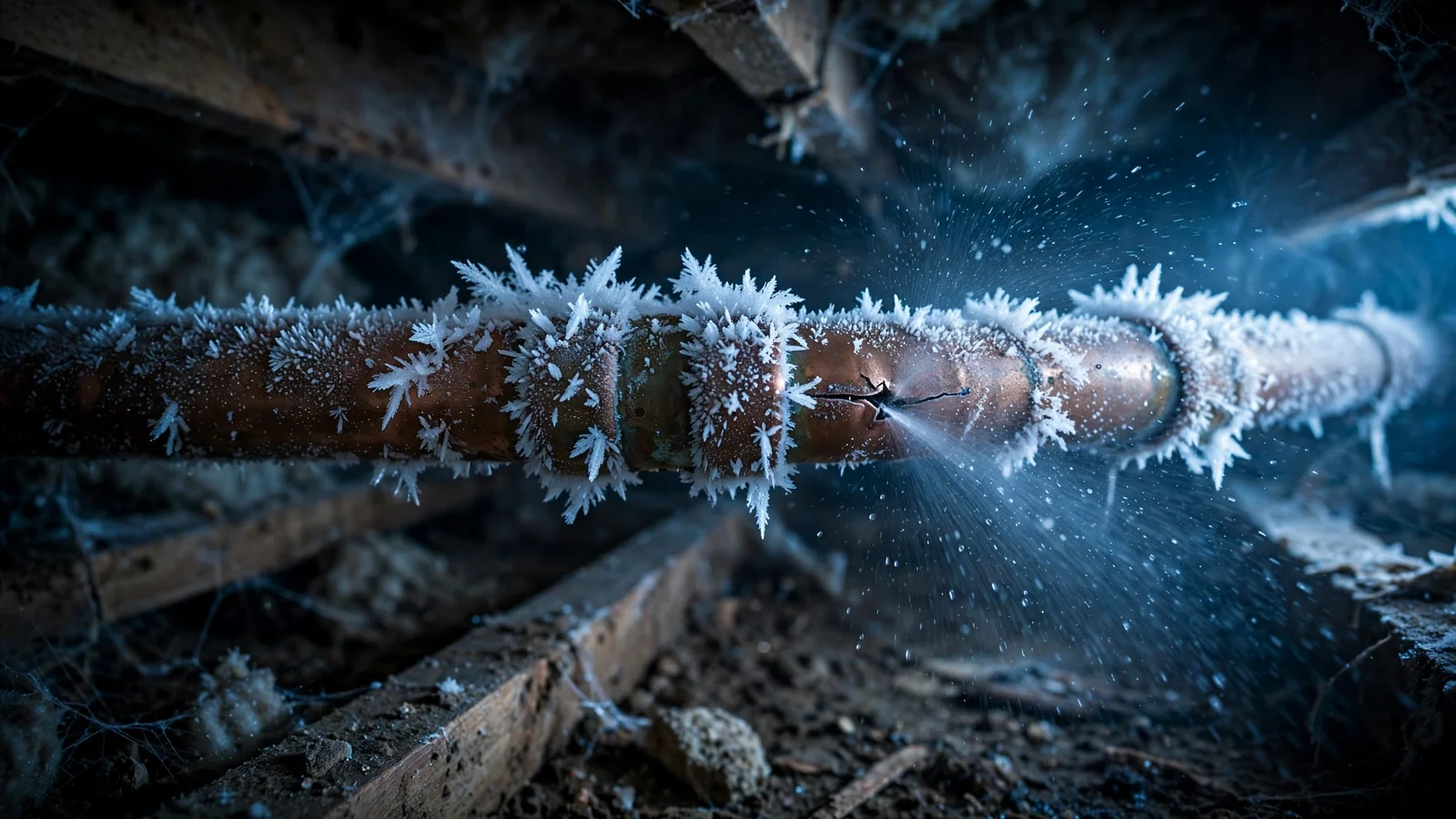
Signs a pipe has burst
- Water running through a ceiling, down a wall, or pooling on the floor with no visible source
- A sudden drop in water pressure, or water that's discolored after a freeze
- The sound of running water when every fixture in the house is off
- A bulging, sagging, or water-stained section of ceiling or drywall
- Damp carpet or warped flooring in a finished basement, especially after a cold snap
- A water meter that keeps spinning even with all fixtures shut off
How your provider repairs a burst pipe
1. Stop the water and locate the break
Your provider confirms the main valve is shut (or shuts it), then traces the water back to the failed section using moisture readings and, where needed, acoustic listening. The stain on the ceiling is the last place water surfaces, not the first.
2. Cut out the failed section
The split or corroded section comes out — not just the visible crack, but back to sound material on both sides. Patching over weakened pipe is how the same break happens twice.
3. Replace and pressure-test
New pipe goes in matched to your existing system, and the repaired line is pressure-tested before walls or ceilings are closed. You get told exactly what was replaced and what condition the surrounding line is in.
4. Walk through the water damage
Before your provider leaves, they walk you through what got wet — walls, insulation, flooring — and what needs drying or removal so the burst doesn't become a mold problem next month.
Burst pipes in Littleton homes
Littleton's burst-pipe pattern follows the foothills weather: a mild December lulls everyone, then an Arctic front drops temperatures into the single digits and pipes in exterior walls and crawlspaces freeze overnight. The historic homes near downtown add corrosion to the equation — galvanized lines from decades ago, thinned from the inside. In the newer southern subdivisions, the damage multiplier is the finished basement: a break above the ceiling can soak drywall, carpet, and everything stored below before anyone knows. Local plumbers work these exact scenarios every winter, which is why their first questions are about where the water is and whether the main is shut off.
Need burst pipe repair in Littleton?
One call connects you with a local technician. No forms.
(555) 234-5678📞 Call Now