Frozen Pipe Repair in Littleton, CO
You turn on the faucet on a cold Littleton morning and get a trickle — or nothing. Somewhere between the street and that tap, a section of pipe has frozen solid. At the foothills, where overnight lows plunge and stay down, frozen pipes are a routine winter call — and a misunderstood one. The ice itself isn't the whole problem: as water freezes it expands, and the pressure it builds between the ice blockage and the closed faucet is what splits pipes.
That means a frozen pipe needs two things, in the right order: thaw it without cracking it, and check whether the pressure already did damage. Heating a frozen line too aggressively — or in the wrong spot — can turn a freeze into a burst. Your provider works along the line to find the frozen section, thaws it gradually and evenly, and inspects the run for splits and forced joints once water is moving again.
Finding the freeze is its own skill. The frozen spot is rarely at the faucet that stopped working — it's wherever the line passes through the coldest part of the house: the crawlspace, an exterior wall, the garage, the unheated basement corner. Your provider traces the line, not the symptom. And once the water is back, the useful conversation is about why that section froze, because a pipe that froze once will freeze again on the next cold night.
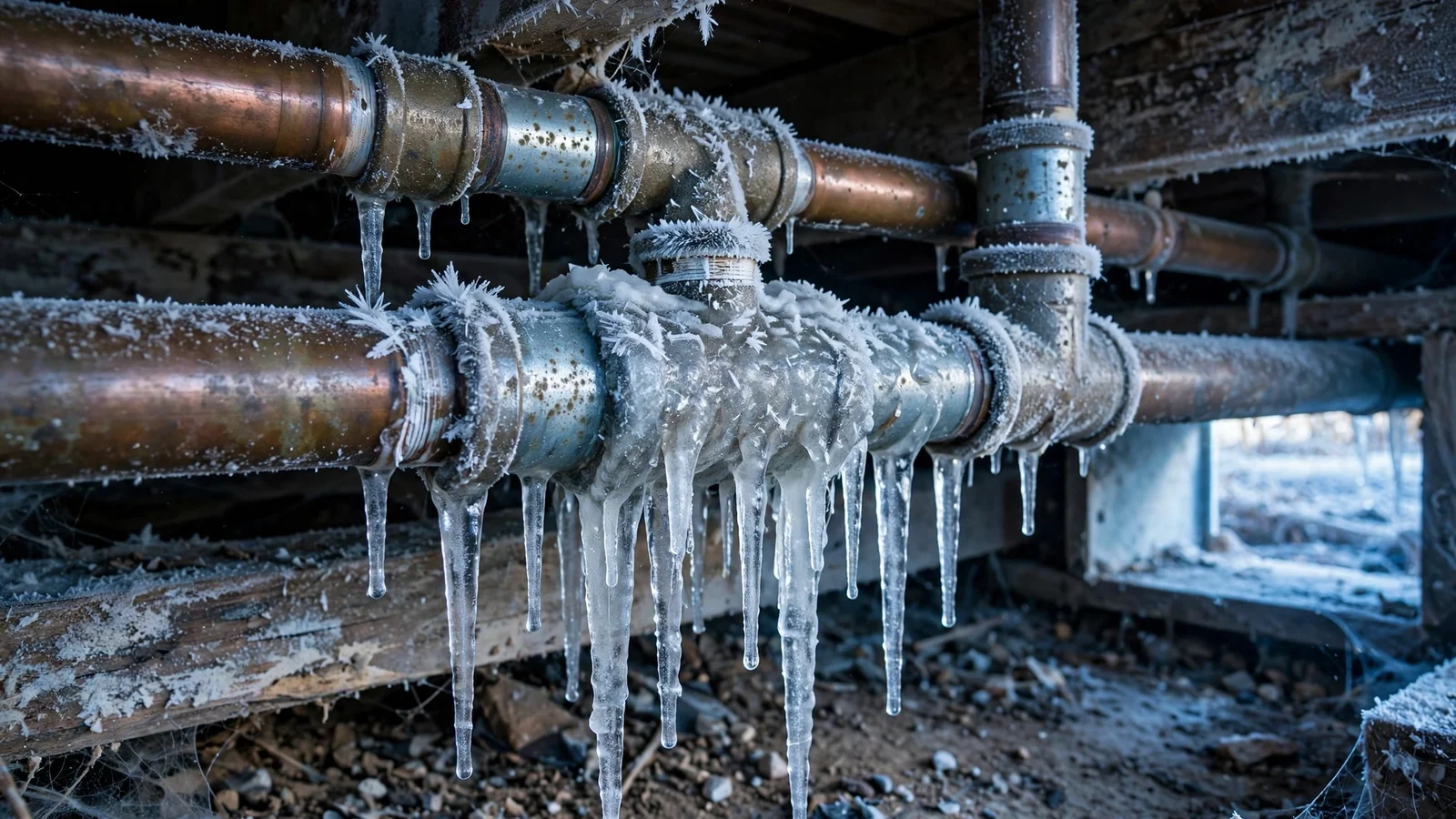
Signs your pipes are frozen
- Little or no water from a faucet on a cold morning, while other fixtures still work
- Frost visible on an exposed pipe in the crawlspace, garage, or basement
- A section of pipe that looks bulged or feels different from the rest of the line
- Unusual smells from a drain or faucet — a sign of a frozen drain line backing up
- Gurgling or banging sounds when you try to run water
- Any of the above after a night of single-digit temperatures at the foothills
How your provider thaws and repairs frozen pipes
1. Trace the line to the freeze
Your provider follows the supply line from the dead fixture back through the house, checking the cold zones first — crawlspace runs, exterior walls, garage lines — using temperature differences along the pipe to pinpoint the frozen section.
2. Thaw gradually, from the faucet back
The frozen section gets warmed evenly and gradually, working from the faucet toward the blockage so melting water has somewhere to go. Open flames and high-heat shortcuts crack pipes and start fires; your provider uses controlled heat and patience instead.
3. Inspect for splits and forced joints
Once water moves, the whole run gets checked. Freeze pressure often does its damage away from the ice — a joint forced open on the far side of the blockage. A leak found now is a repair; a leak found at the next thaw is a flood.
4. Protect the line from the next freeze
Insulation on the exposed run, sealing the draft that chilled it, and rerouting advice for chronic spots. Your provider tells you what they found and what would keep it from happening again.
Frozen pipes in Littleton homes
Littleton's elevation and foothills position make its freezes sharper than the rest of the metro: Arctic fronts slide down the Front Range and settle into the South Platte valley, and the temperature swings — mild one afternoon, single digits that night — catch pipes that steady cold wouldn't. The vulnerable runs repeat house to house: lines crossing crawlspaces in the older neighborhoods, hose bibs on north-facing walls, supply lines in garages at the newer subdivisions, and the long unheated stretches in second homes that sit empty midweek. Local plumbers know the map of cold spots because they thaw the same ones every January.
Need frozen pipe repair in Littleton?
One call connects you with a local technician. No forms.
(555) 234-5678📞 Call Now